the unobstructed liberation of the subconscious
Sexuality, desire and violence dominate the Surrealist’s mission to liberate the subconscious and embrace the irrational. In a beautiful, paradoxical way, the surrealists turn the intangible inner psyche empirical through heavy symbolism, écriture, juxtaposition of objects and so forth, such as Dalí’s recurring use of draws to represent the memories that can be locked away or watches to show the fluidity of time. This can be considered rather ironic as Surrealism’s proponents aspire to process the absurd forces of the subconscious, that are so very detached from a rationalist understanding of the universe, in terms that are inextricable from and reliant on the real world.
Why is the subconscious so important? André Breton, surrealism’s founder and the leader of the group, had a persistent fascination with Sigmund Freud’s psychoanalysis and writings, particularly The Interpretation of Dreams which heavily inspired his goals for surrealism.
However, the use of automatic drawing is a highly successful way to detach from the standard, rational view of life. Particularly as autonomy and chance are key in the process (and the Surrealist’s mission for that matter) since they have a remarkable propensity to unleash the subconscious.
Some argue that the verbal is a better means to understand the subconscious than the visual. There are even fewer constraints than with drawing and the sense of ephemerality of the spoken word is important. Words are so fleeting that, perhaps, an individual can be attain a greater degree of liberation.
The automatic method is simple. Firstly, the participant frees their mind from any apparent links to enter into a trancelike state. Next, they make a repetitive, mechanical gesture until images start to form.
The ‘automatic drawings’ produced capture the movement of subconscious thought, completely free from rigorous preconception and judgement. The method is intended to place the participate in a state where they lie untouched by self-consciousness and are able to shed themselves of fickle connections to the outside world.
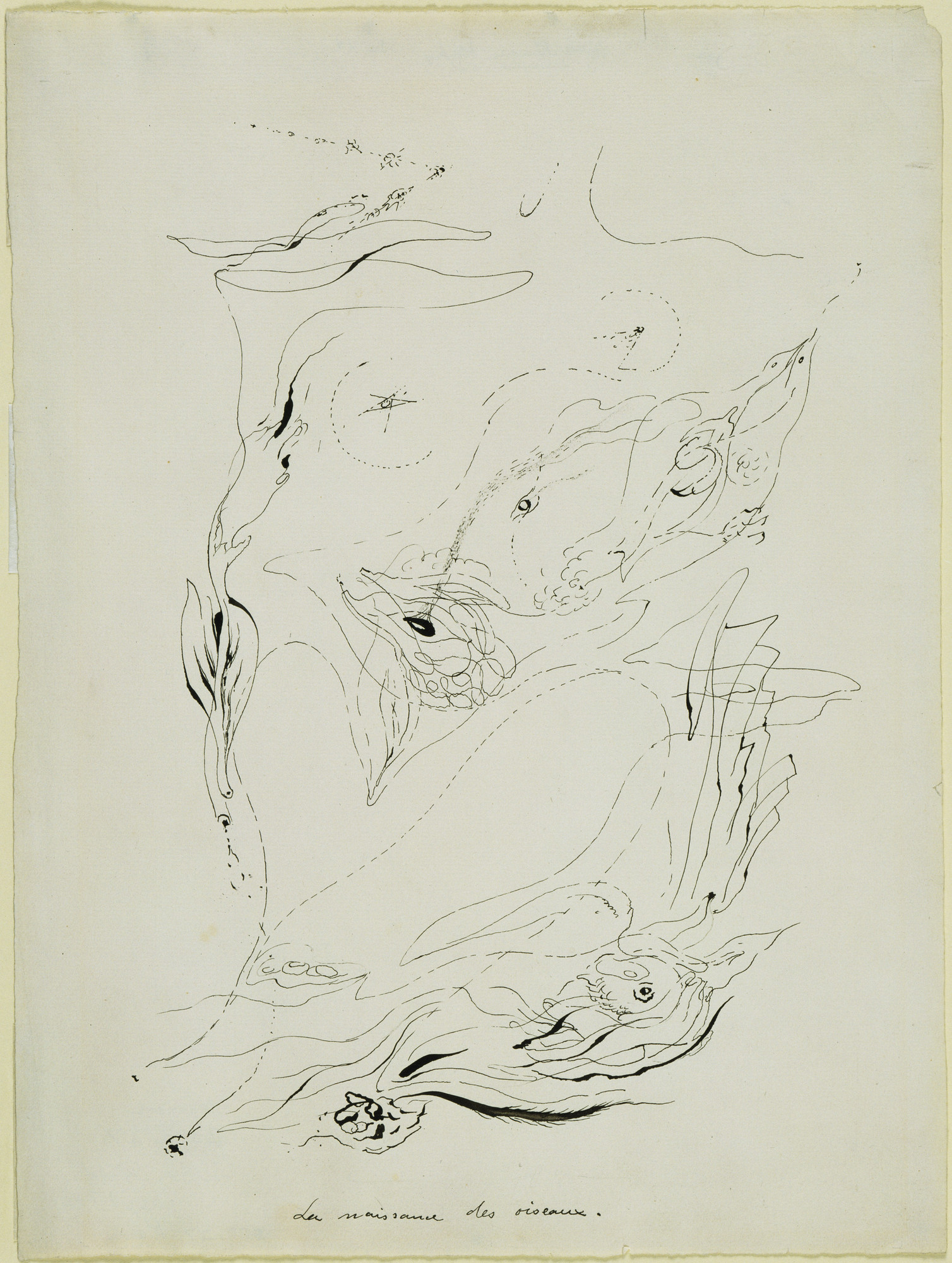
La naissance des oiseaux The Birth of Birds
c. 1925
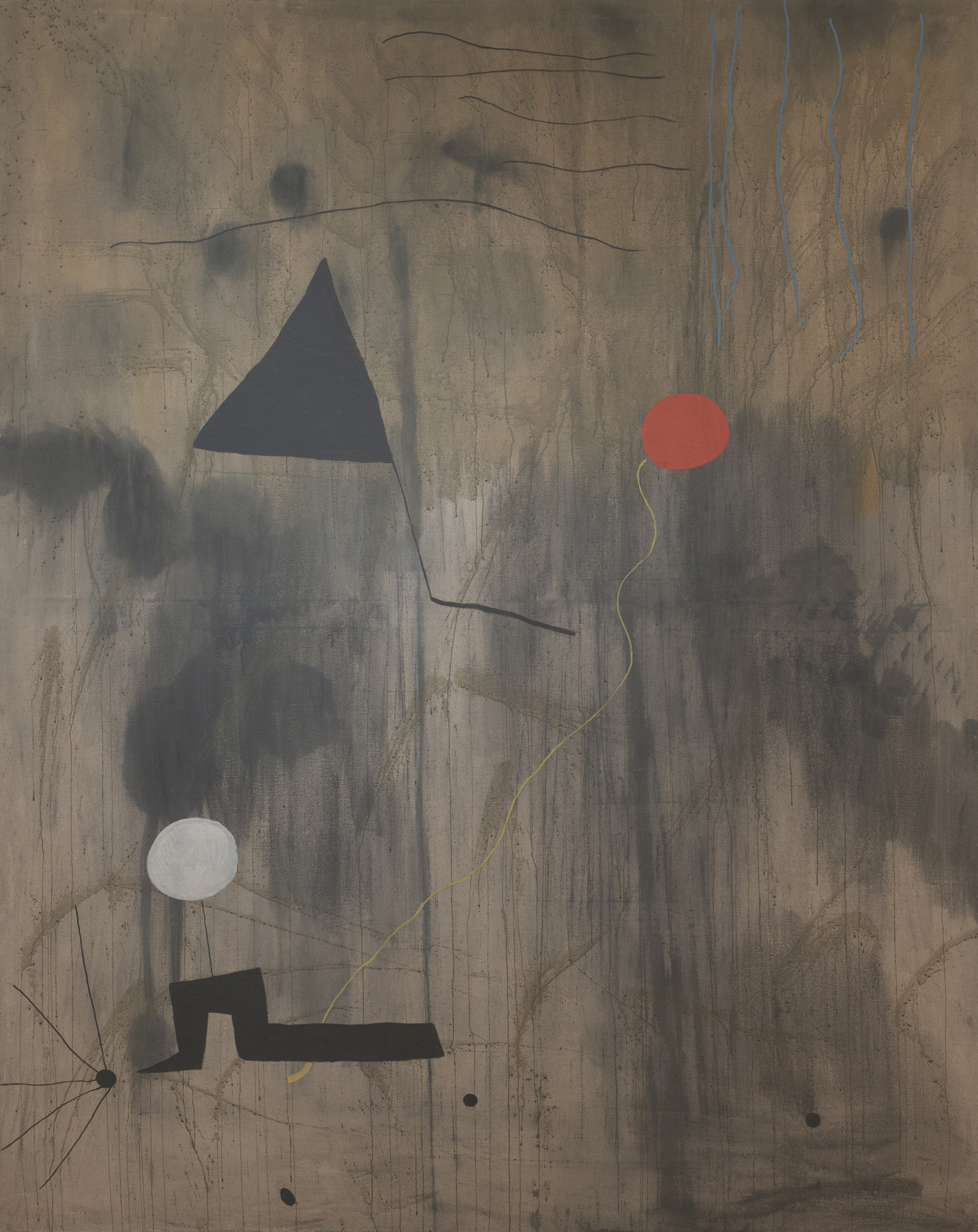
The Birth of the World
1925
In The Birth of the World, Míro explores both deliberation and liberation. A series of flat geometric shapes and lines on a background of uncalculated wash on an unprimed canvas, alike some primordial soup. The first stage of his world was automatic and free, whereas the second was carefully planned. However, there does not seem to be a clear association between the objects depicted. Perhaps this is intended to evoke a sense of both order and disorder to show the obscure nuance of the human psyche and the bizarre connection of ideas.
In summation, irrespective of whether or not you agree that the subconscious can be accessed in this way, the automatic processes hold great potential in allowing an artist to separate themselves from crippling perfectionism and long-standing rules of how to create art.
 Squamlette